Last updated November 23, 2026
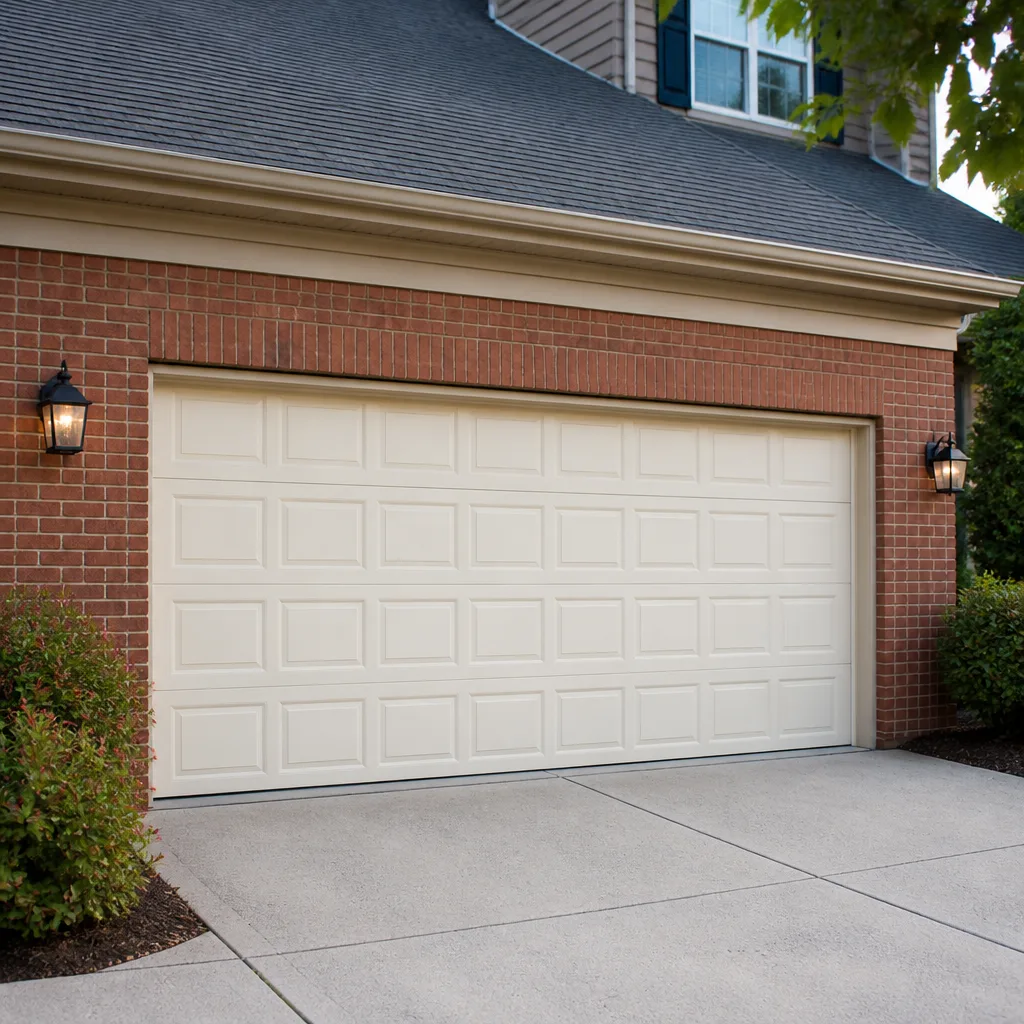 Raised-panel steel
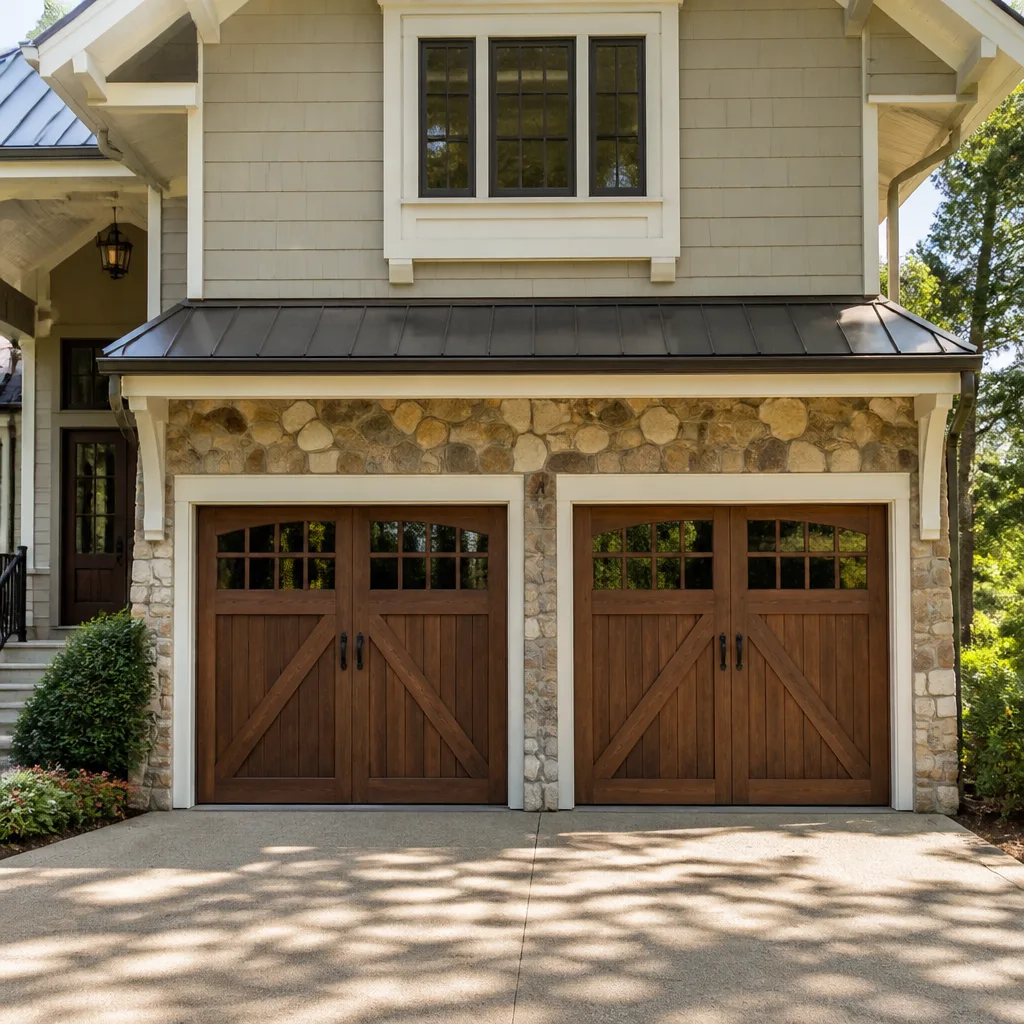 Carriage house
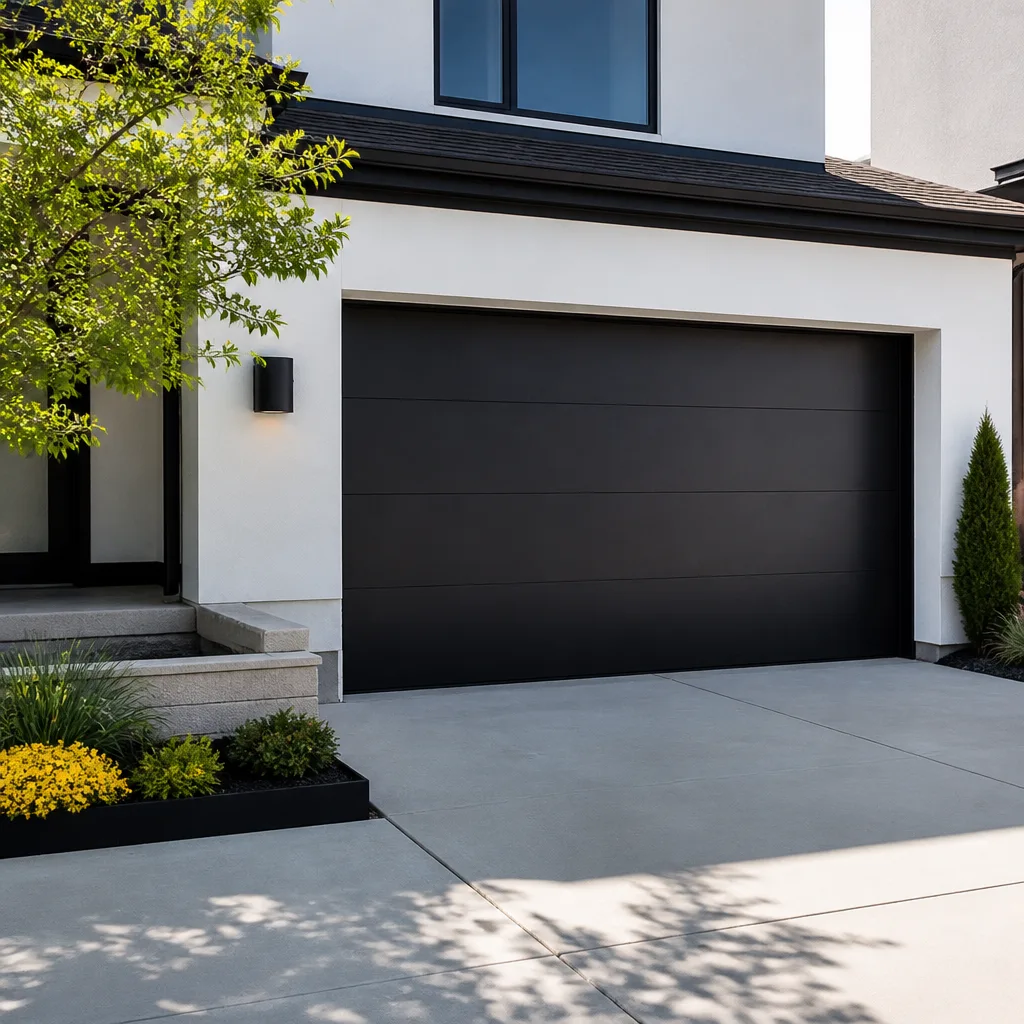 Modern flush
 Full-view glass
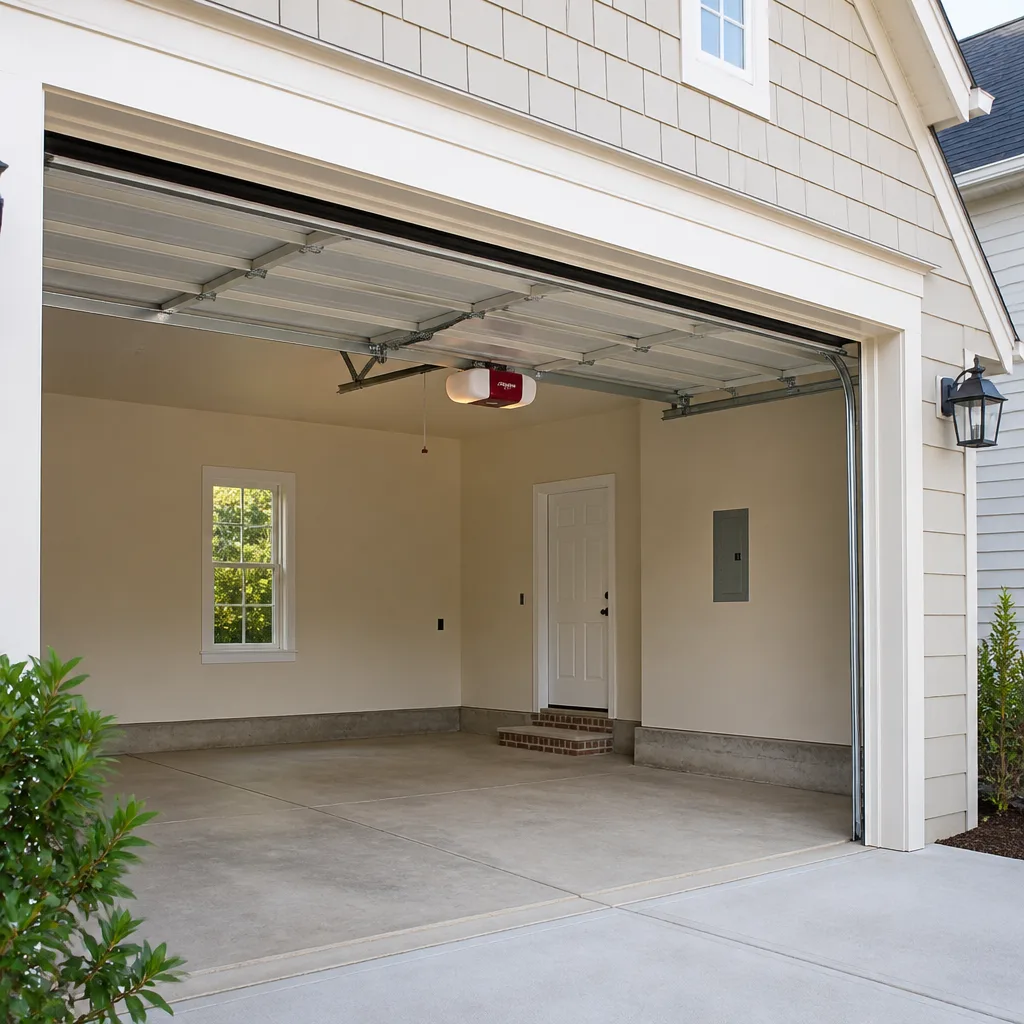 LiftMaster openers
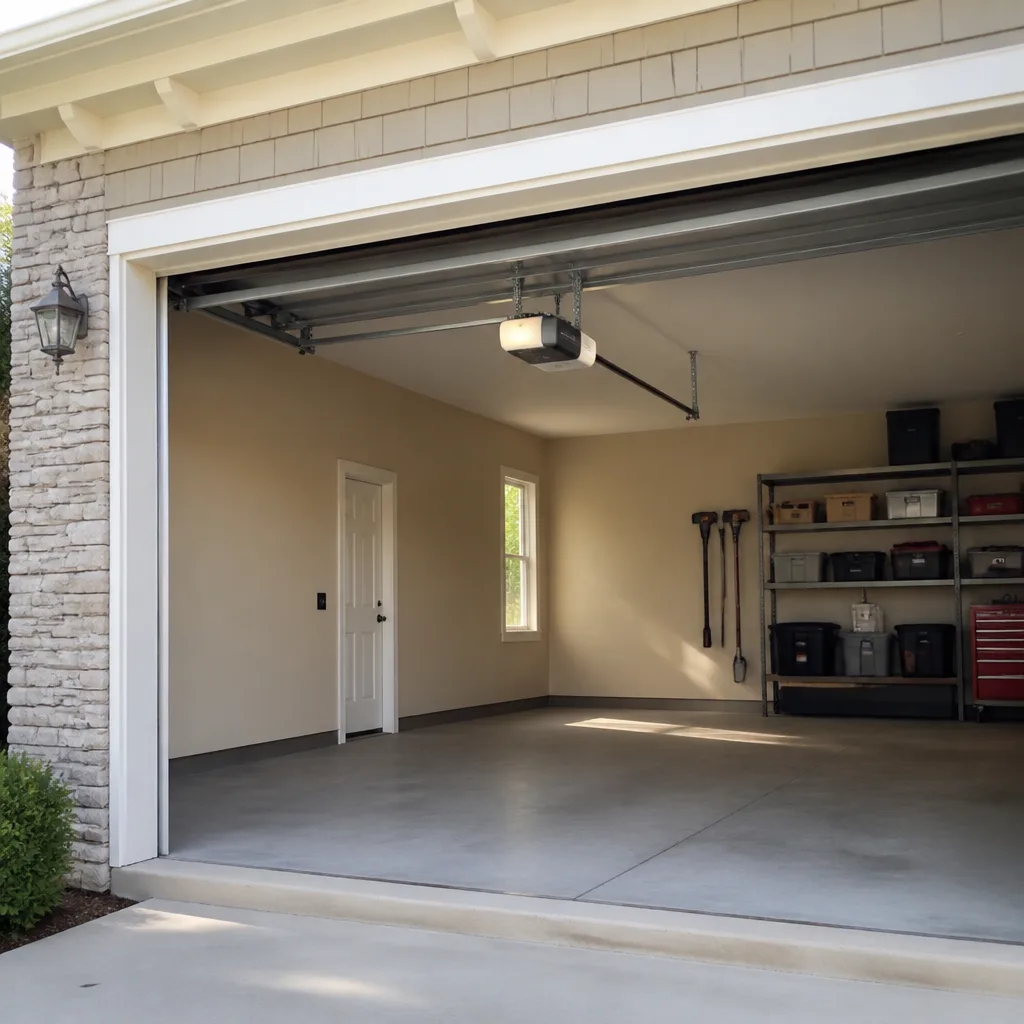 Chamberlain openers
Full 25-point door and opener safety check with every visit - springs, cables, rollers, tracks, and your LiftMaster or Chamberlain opener included
You get a price before we start. It does not change when the pro arrives.
Get your free estimateDIY vs Professional Garage Door: The West Hartford Homeowner’s Decision Guide
Most homeowners think the garage door question is about skill. It isn’t. It’s about arithmetic. A torsion spring stores enough energy to break a wrist or take out an eye, and that energy doesn’t care how handy you are or how many tutorials you’ve watched. The real decision comes down to which tasks have a risk profile a homeowner can reasonably absorb and which ones have injury and liability consequences that make a technician the only rational call. In this guide, we break the garage door down task by task, so you know exactly where the DIY line sits in a West Hartford home, what tools and time the “easy” jobs actually demand, and how to prep your door so a pro’s billable hours – and your invoice – come in lower.
Quick Answer
Some garage door work is genuinely safe for a homeowner: weatherstripping, safety-sensor alignment, lubrication, and assessing a dented panel. Spring work, cable replacement, and structural header repair are not – those carry real injury risk and, in Connecticut, liability exposure if unpermitted work damages property or hurts someone. Everything in between depends on the door, its age, and how comfortable you are on a ladder.
Styles & brands we work with
- Raised-panel steel
- Carriage house
- Modern flush
- Full-view glass
- LiftMaster openers
- Chamberlain openers
Table of Contents
- Why Risk, Not Skill, Decides the DIY Question
- What’s Genuinely DIY-Safe on a Garage Door
- What Requires a Licensed Technician (And Why)
- The Connecticut Liability Picture Most Homeowners Miss
- The Real Cost of Doing It Yourself: Tools, Time, and Second Attempts
- How to Prep Your Door to Lower the Pro’s Invoice
- The Middle Path: Phase One by You, Phase Two by a Tech
- What West Hartford Doors Face That Others Don’t
Why Risk, Not Skill, Decides the DIY Question
When a homeowner tells us they’re “pretty handy,” we believe them. The problem is that handiness isn’t the variable that matters on a torsion spring. Physics is. A standard residential torsion spring is wound under heavy tension, and it holds that tension even when the door is down and the power is off. One slip – a winding bar popping out of a cone, a cable releasing under load – and the stored energy goes wherever it wants. That’s the entire reason emergency rooms see a spike in garage door injuries in spring, when homeowners decide to “just adjust” a spring after a video made it look manageable.
Compare that to replacing the bottom weather seal on a West Hartford door. The worst outcome is a crooked seal and a draft. The risk profiles are not in the same universe, and that’s the frame you should use for every task on your door.
Here’s how we think about the split:
- Low-energy tasks (seals, sensors, lubrication, visual inspection) – the stored energy is contained or absent. DIY is reasonable.
- High-energy tasks (springs, cables, drums, brackets holding tension) – the stored energy can injure you the moment one component fails. Professional territory.
- Structural tasks (header repair, track re-anchoring into compromised framing) – these affect the load path of your house. Not a homeowner job in any state.
The question isn’t “can I do this?” It’s “what happens if this goes wrong at the worst possible moment?” Answer that honestly and the line draws itself.
What’s Genuinely DIY-Safe on a Garage Door
You can absolutely handle several garage door jobs yourself, and doing so frees your budget for the work that actually needs a technician. Here’s the short list we’d hand any capable homeowner.
Bottom weather seal replacement
The rubber or vinyl seal along the bottom of the door takes the brunt of Connecticut winters – snow, ice, salt spray from the road, freeze-thaw cycles. When it cracks or hardens, you get drafts, water intrusion, and a door that whistles in the wind. Sliding a new seal into the retainer is a modest job with basic hand tools and no stored energy to worry about.
Safety-sensor alignment
If your door reverses for no reason or won’t close, the photo-eye sensors near the floor are the first thing to check. They need a clear line of sight to each other and a clean lens. A bumped sensor or a spiderweb can shut the whole door down. Realign, wipe clean, retest.
Lubrication
Hinges, rollers, and the track itself benefit from a garage-door-specific lubricant a couple of times a year. Do not use WD-40 on the tracks – it attracts grit. A dry silicone or lithium spray on the moving metal parts keeps the door quiet and reduces strain on the opener.
Panel dent assessment
A dented panel is worth a careful look before you call anyone. If the panel is cosmetic and the door still tracks straight, it may not need replacement. If the dent has pushed the panel out of alignment or the door is binding, that’s a sign to stop and call. Assessing is safe. Trying to hammer a dent out of a hollow steel panel usually makes it worse.
Visual inspection and hardware tightening
Walk around the door with the opener disengaged. Look at the rollers, the hinges, the cables (look, don’t touch), and the brackets. Tighten any loose bolts on the hinges and brackets that are under no tension. Notice anything frayed, kinked, or bent? Write it down for the technician.
For heavier repair work beyond this list, our garage door repair team handles the tasks a homeowner shouldn’t. If you’re dealing with an opener that’s behaving strangely, our garage door opener repair service covers the brand-specific diagnostics that generic fixes miss.
What Requires a Licensed Technician (And Why)
Three categories of garage door work belong to a trained technician, and it’s not a matter of gatekeeping. It’s a matter of what happens when a component under load lets go.
1. Torsion and extension spring work
Springs are the highest-stakes item on any door. Replacing a spring requires the correct winding bars, knowledge of the door’s weight and cycle rating, and the discipline to keep your body out of the release path. A matched pair should usually be replaced together – the surviving spring has been carrying twice its share since the first one broke, and it’s close behind. The cost of doing it once, correctly, is always less than doing it twice, and the injury math is lopsided. This is the single job where we’d tell any homeowner, no matter how skilled, to step back. Our garage door spring repair service exists because this work requires the right tools and the right training. Spring failure is a safety issue, not just an inconvenience.
2. Cable replacement
Cables are also under tension, held in place at the bottom bracket – a component that can cause serious injury if it snaps unexpectedly. Frayed cables are a warning sign, not a repair. If you see a stray strand or a cable that’s jumped its drum, keep clear and call. Cable tension has to be balanced left and right; a mis-tensioned cable will drag the door out of square and wear the tracks.
3. Structural header repair
The header is the framing above the garage opening that carries the load of the door and the tracks. When it’s rotted or sagging, the whole door system misaligns. This is carpentry plus load-path thinking, and it’s also the kind of work that usually needs a permit from the town. A general handyman shouldn’t touch it, and neither should a homeowner with a YouTube playlist. West Hartford has plenty of older housing stock where the garage framing has seen many winters – it’s worth a professional look whenever the door starts dragging or the tracks bow.
Beyond these three, we’d also flag opener replacement on a modern smart-home unit, and any track work that involves re-anchoring into the ceiling. Both combine electrical or fastening work with the need to keep the door tracking true.
The Connecticut Liability Picture Most Homeowners Miss
The injury risk is the part homeowners think about. The liability risk is the part they often don’t, and in West Hartford it’s worth understanding before you pick up a winding bar.
Most homeowner’s insurance policies exclude damage caused by faulty workmanship or by work done in violation of code. If your own garage door install or repair causes a fire, a structural failure, or water damage because it wasn’t done to code, the claim can get complicated – or denied outright. Add to that the fact that a garage door is a large moving object suspended over a driveway where kids play and cars park, and the incentive to do it right the first time gets sharper.
There’s also the permit question. Structural work on a garage – header repair, for example – typically requires a permit from the town, and unpermitted work can come back to bite you at resale or during an inspection. Most towns require a permit for structural changes, so ask West Hartford’s building department directly about your specific job before you start. When a vetted local professional handles the work, the liability picture is cleaner because the pro is licensed and insured as their state requires, and the work is done to code.
One more point: a failed spring can drop a door fast enough to damage a vehicle or a person standing underneath. If you’ve had a spring break, don’t park under the door or try to open it manually until it’s been looked at.
The Real Cost of Doing It Yourself: Tools, Time, and Second Attempts
Every tutorial compresses time. A fifteen-minute video makes a spring job look like a project, when the actual work includes sourcing the right spring by weight and cycle life, correctly tensioning it, testing the door’s balance, and re-checking the opener’s travel limits. Those steps are where the clock and the money hide.
Here’s the reality check we’d give a friend:
- Tools you probably don’t own. Winding bars, a torque wrench, the correct safety glasses, a door-specific tool set. Buying them once often costs as much as a technician’s labor – and you may never use them again.
- Sourcing the right part. Springs aren’t universal. The correct spring for your door depends on the door’s weight and the number of cycles it’s rated for. Order the wrong one and you’ve doubled the timeline and your cost.
- The second attempt. A door that isn’t balanced will strain the opener, wear the tracks, and sometimes reverse unexpectedly. The second trip to the hardware store and the second attempt at adjustment eat the “money saved” fast.
- Time cost. A skilled technician has done this many times. A homeowner doing it for the first time is working at roughly a quarter of that pace on a good day. Add sourcing, cleanup, and re-testing and a weekend disappears. For many West Hartford homeowners, that’s a weekend better spent elsewhere.
- The diagnostic value. A technician sees things a homeowner doesn’t – a slightly bent track that will fail in another season, a fraying cable that’s about to snap, a worn bottom bracket. That’s information you can’t buy at the hardware store.
The good news is that most garage door repairs are modest, one-time costs. For spring work, typical estimates in the West Hartford area run roughly $180 to $340 for a single spring, and a matched pair is usually about twice that since it’s standard to replace both together. Call (855) 337-1712 for an exact quote – estimates are free. There’s no discount for “DIY effort,” but you can absolutely lower the final invoice by prepping the door before the technician arrives.
How to Prep Your Door to Lower the Pro’s Invoice
You can shave real time – and real dollars – off a professional bill by doing the safe, non-technical prep yourself. A technician who doesn’t have to move boxes, dig out the manual, or trace a circuit is a technician who gets to the actual repair faster.
- Clear a working zone in front of the door. Move the car, the bikes, the recycling bins, the lawn equipment. A four-foot work zone on both sides of the door lets the technician work without moving your stuff.
- Find the door’s manual and any warranty paperwork. If you have the model number and brand (LiftMaster, Chamberlain, Wayne Dalton, Raynor, and the other major lines), it speeds up diagnostics. For older doors, this is especially useful – Wayne Dalton and Raynor systems have specific part specs that a generic part won’t match.
- Test the door and write down what happens. Does it open partway and reverse? Does it make a specific noise at a specific spot? Does one side hang lower than the other? A precise description of the symptom is worth ten minutes of diagnosis.
- Note the timeline. When did the problem start? Was it a sudden failure, or a gradual decline? Sudden failures usually point to a broken spring or cable. Gradual decline often points to opener wear, track misalignment, or a stretched spring.
- Clear the interior approach. If the opener is mounted on the ceiling, the technician needs to reach it. Move anything stacked between the door and the opener unit.
- Disengage the door from the opener. The pull rope is usually red. Pull it to disconnect the door from the opener motor so the technician can test the door’s manual balance first thing.
Those steps take you maybe twenty minutes and can save a technician half an hour of setup. Twenty minutes at the start is the easiest invoice reduction in the whole process.
The Middle Path: Phase One by You, Phase Two by a Tech
There’s a lot of work in a garage door system that breaks cleanly into “homeowner-safe” and “technician-only” phases, and combining them can be the smartest play for a West Hartford homeowner. Here’s how to structure that conversation with a contractor so you get the benefit without crossing into dangerous territory.
Phase one tasks (safe):
- Remove old weatherstripping and prep the retainer for a new seal.
- Clear the work area and take photos of the current door condition.
- Note which brand and model your opener is (LiftMaster, Chamberlain, Genie, Craftsman) so the tech brings the right parts.
- Clean the photo-eye lenses and clear cobwebs, then re-test the door’s safety reversal.
- Lubricate the hinges, rollers, and track (dry silicone or lithium, not oil).
Phase two tasks (technician):
- Spring replacement and balance adjustment.
- Cable inspection and replacement.
- Opener diagnostics, programming, and calibration.
- Track alignment and bracket re-tightening under load.
- Any door that needs a full replacement – panel, door, or opener swap.
On the phone, tell the contractor what you’ve already done and what you’re seeing. “I’ve replaced the seal and lubed the hinges; the door still reverses halfway up and the left side hangs lower” is a fantastic call. It tells a technician exactly where to start and can shorten the visit dramatically. Our team at West Hartford Garage Door Repair Pros is happy to work in phases. If you’d rather we handle the whole job in one visit, that’s fine too – the upfront estimate is free either way.
What West Hartford Doors Face That Others Don’t
West Hartford’s housing stock includes a lot of older homes with original or near-original garage doors, alongside newer construction with modern smart-home openers. That mix shows up in the field: a 1960s Craftsman opener in the older neighborhoods and a LiftMaster or Chamberlain unit in the newer builds. Repair or replace isn’t a one-size answer, and the right call often depends on the age of the door panel itself.
Our local weather is another factor. West Hartford winters bring freeze-thaw cycles, road salt spray kicked up onto the bottom seal, and snow loads that pile against the door. Those conditions age seals, freeze tracks, and put strain on opener motors. A door that tracks perfectly in July can start binding in January. That’s why a fall inspection – even a quick once-over for a hardened seal or a frayed cable – is worth scheduling before the first snow.
And in an older neighborhood with a sloping driveway, the door’s balance matters more. A mis-balanced door pulls on the opener more, wears the tracks faster, and gives you less runway before a component fails. In West Hartford, paying attention to the door’s balance on a periodic basis is a simple habit that pays off.
If your door is beyond a simple repair, we handle full door installation as well as service on the existing system. You don’t get handed to a second company when the door needs replacing. Repair or replace – we’ll tell you which one makes sense.
Common Mistakes to Avoid
- Assuming “handy” covers spring work. It doesn’t, and the injury math doesn’t care about your skill level. This is the single decision that leads to the most avoidable injuries.
- Replacing one spring when you should do both. A matched pair shares the load. Installing one new spring on a door whose other spring is already worn shortens the life of the new one and puts the door out of balance.
- Lubricating the tracks. Tracks are designed to run dry. Oil attracts grit, grit wears rollers, and a worn roller can jump the track.
- Adjusting the safety sensors with the door in motion. Always test the sensors with the door stopped and disengaged. A door that reverses unexpectedly on a person or a car is a real hazard.
- Pulling the manual release while the door is up. If the door is open and you pull the release without someone holding it, the door slams down. Only disengage with the door closed.
- Patching structural rot on the header with caulk or spray foam. In a West Hartford garage with older framing, this hides a load-path problem the door system depends on.
- Buying a “universal” spring online. There is no universal spring. The right spring for your door depends on its weight and cycle rating, and the wrong one will wear fast or fail outright.
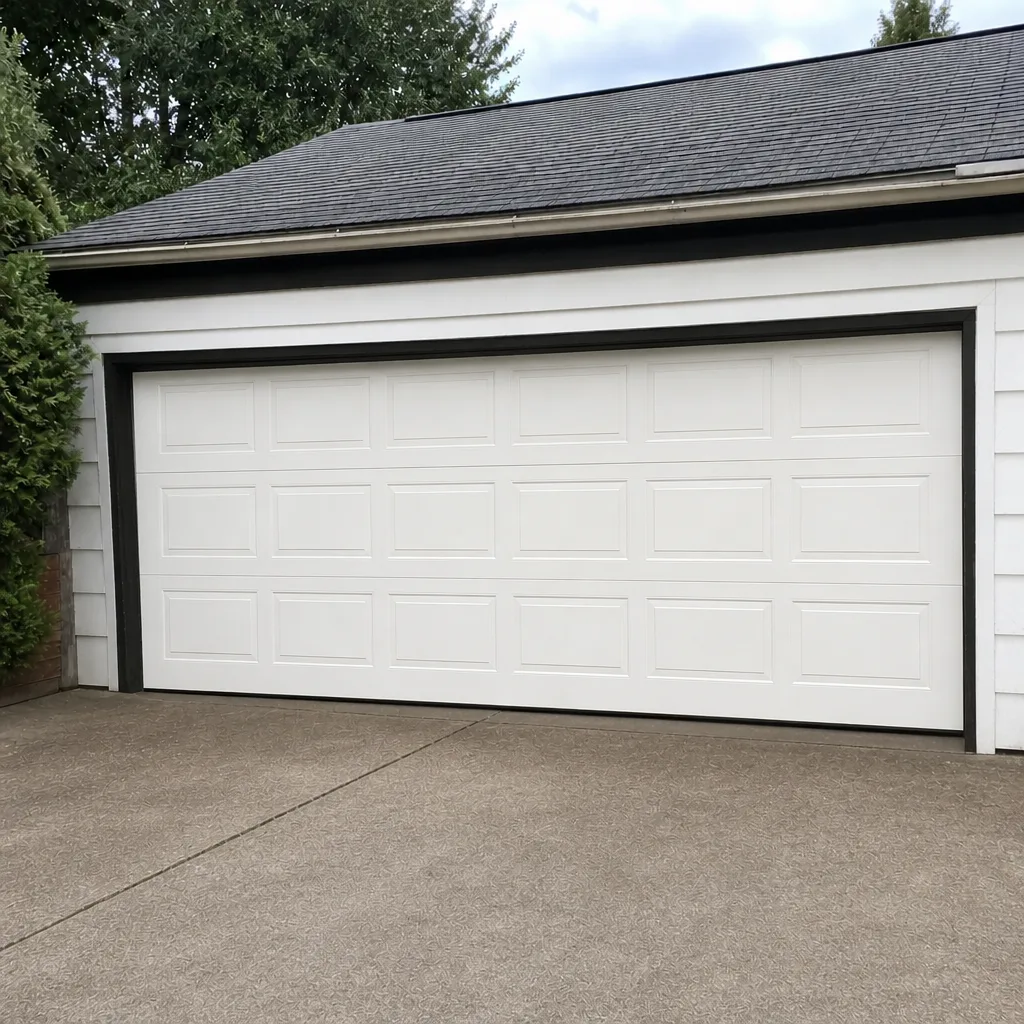
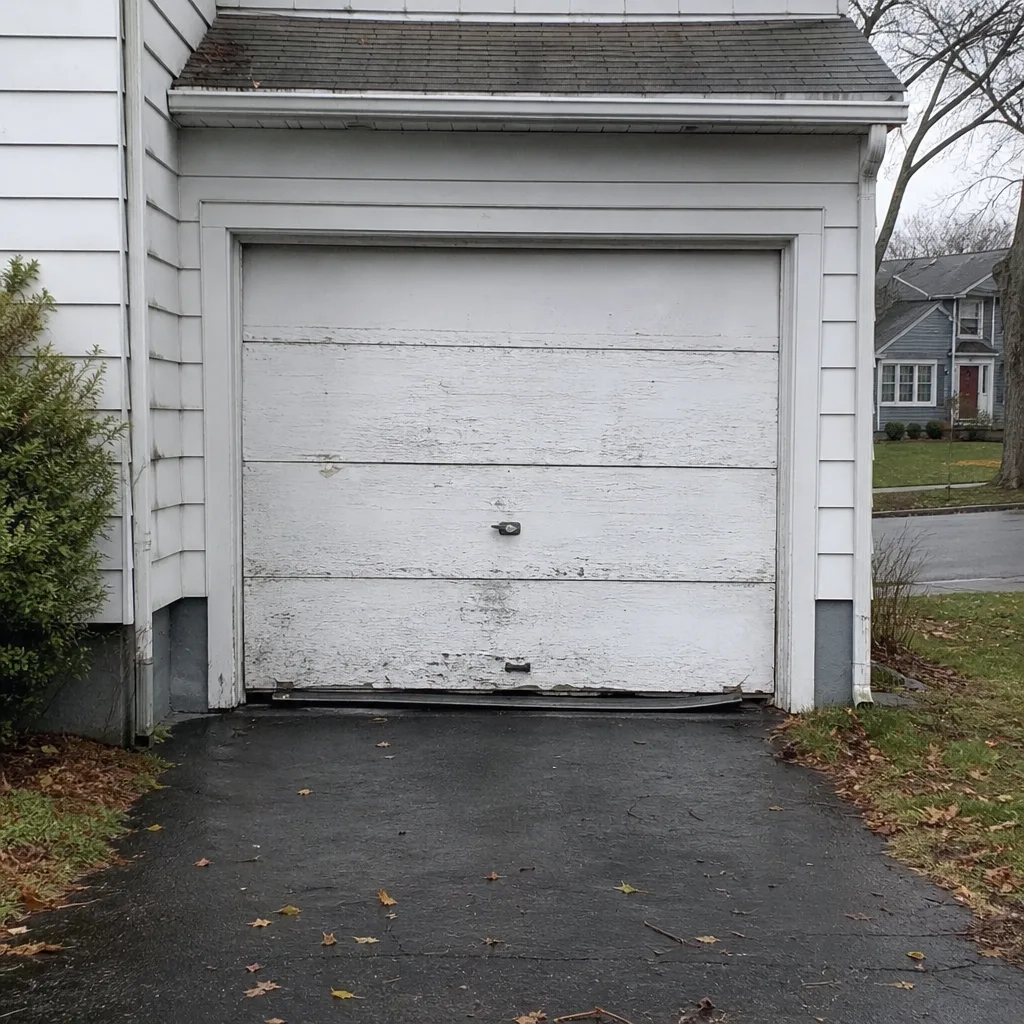
See the difference
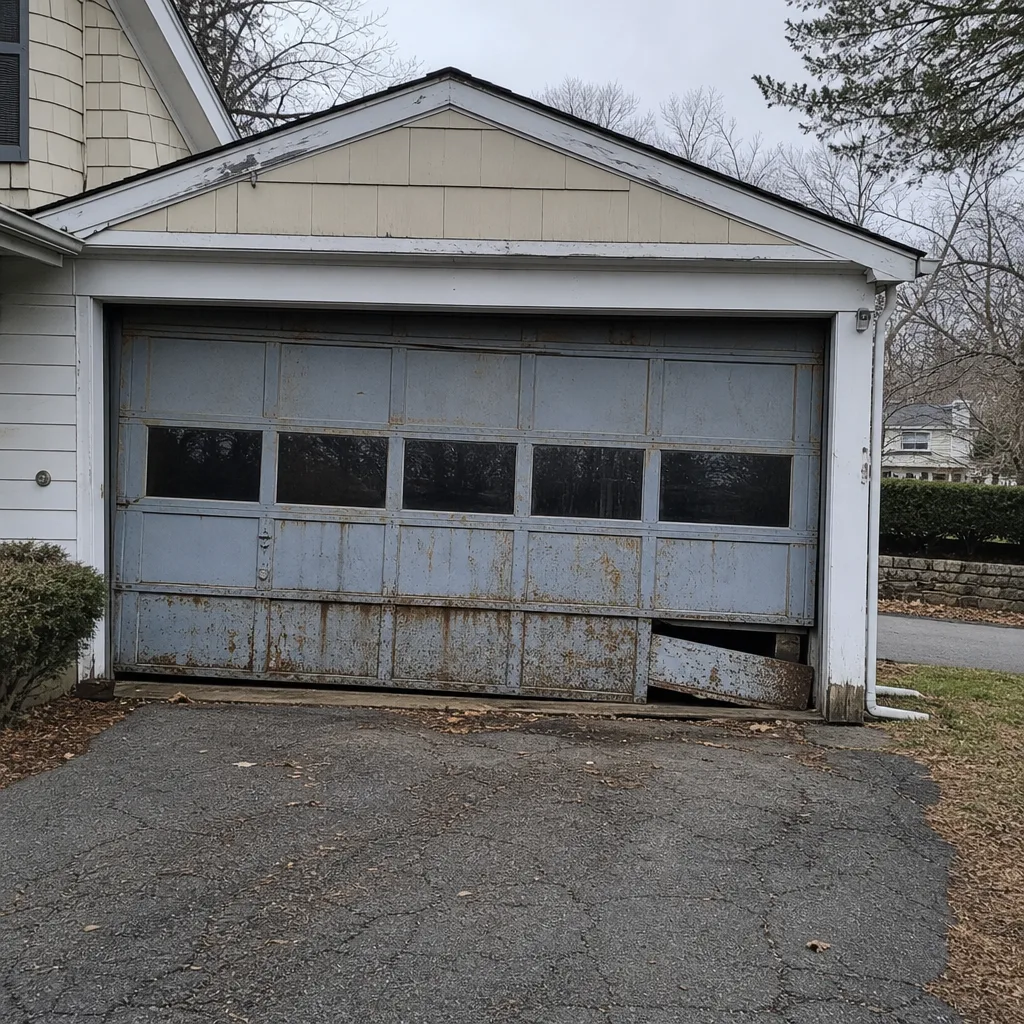 Before
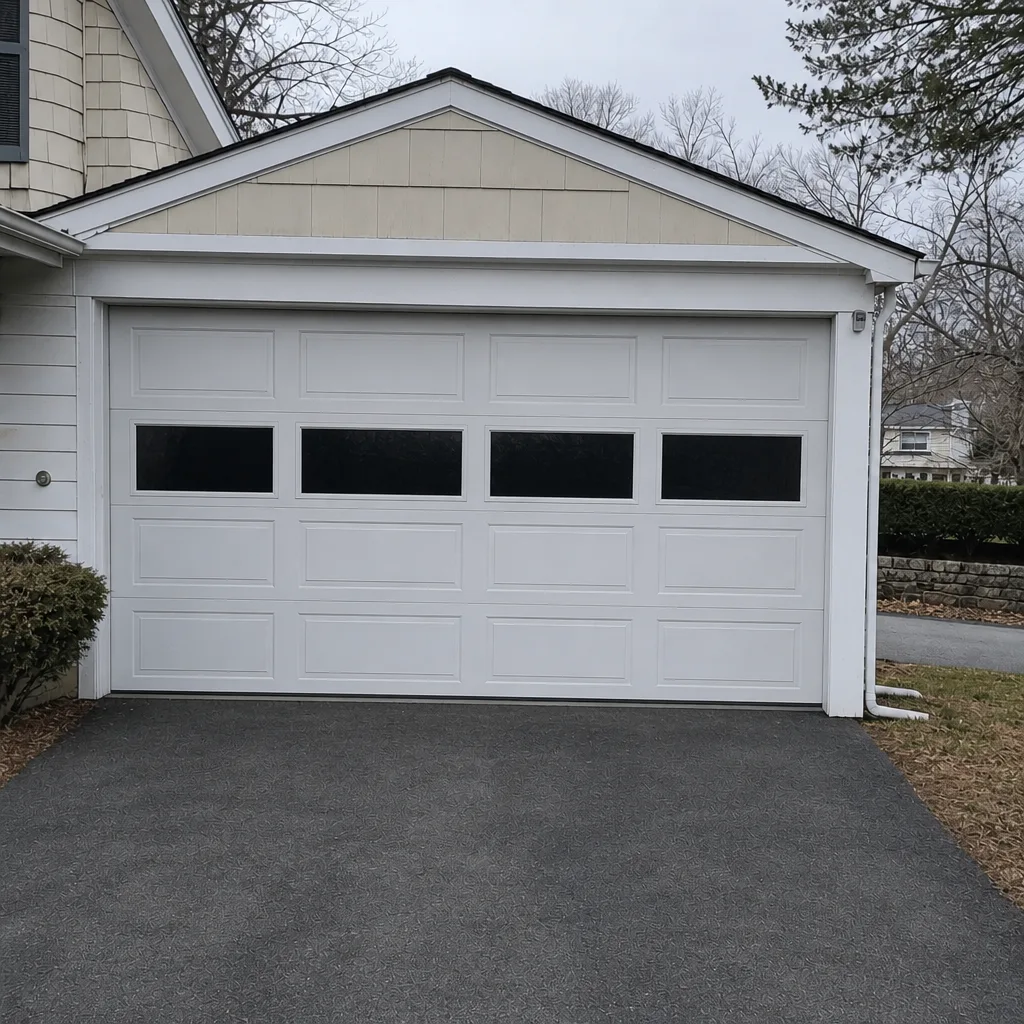 After
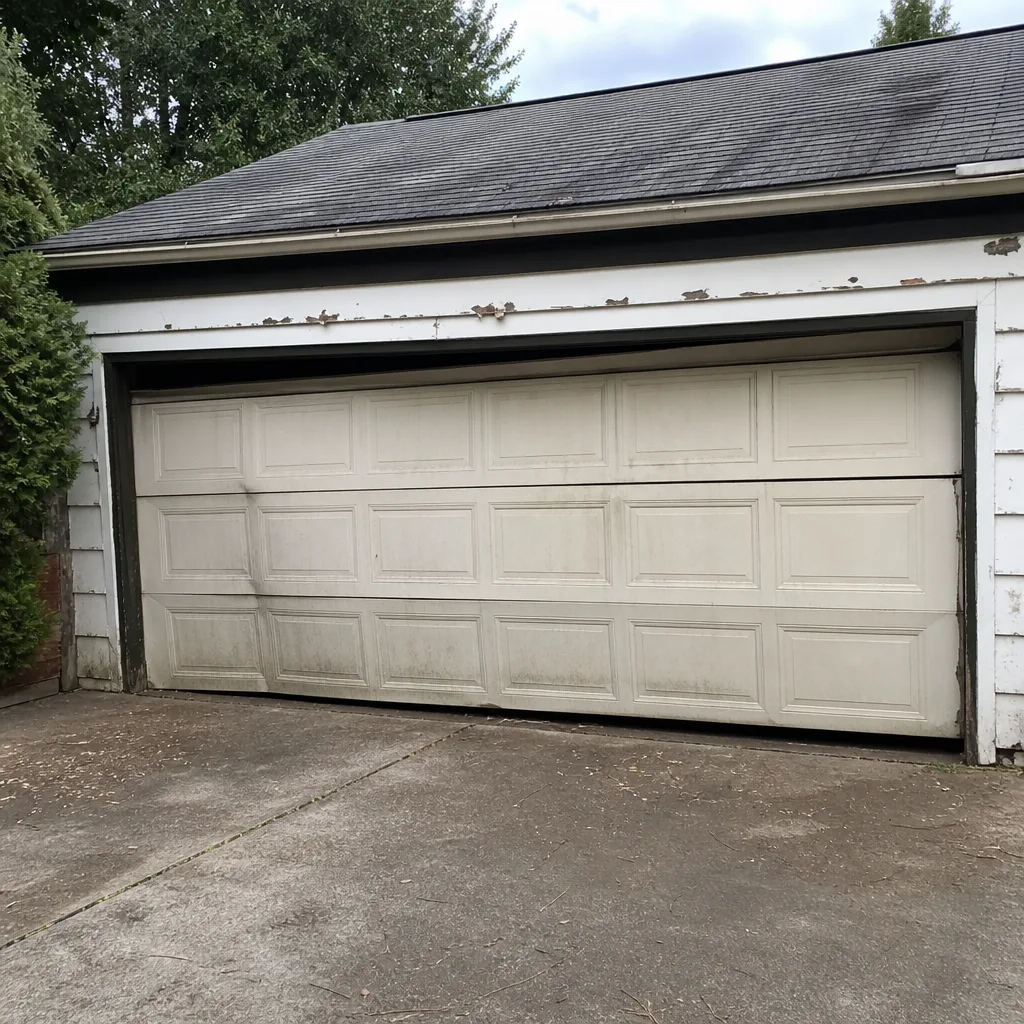 Before
 After
 Before
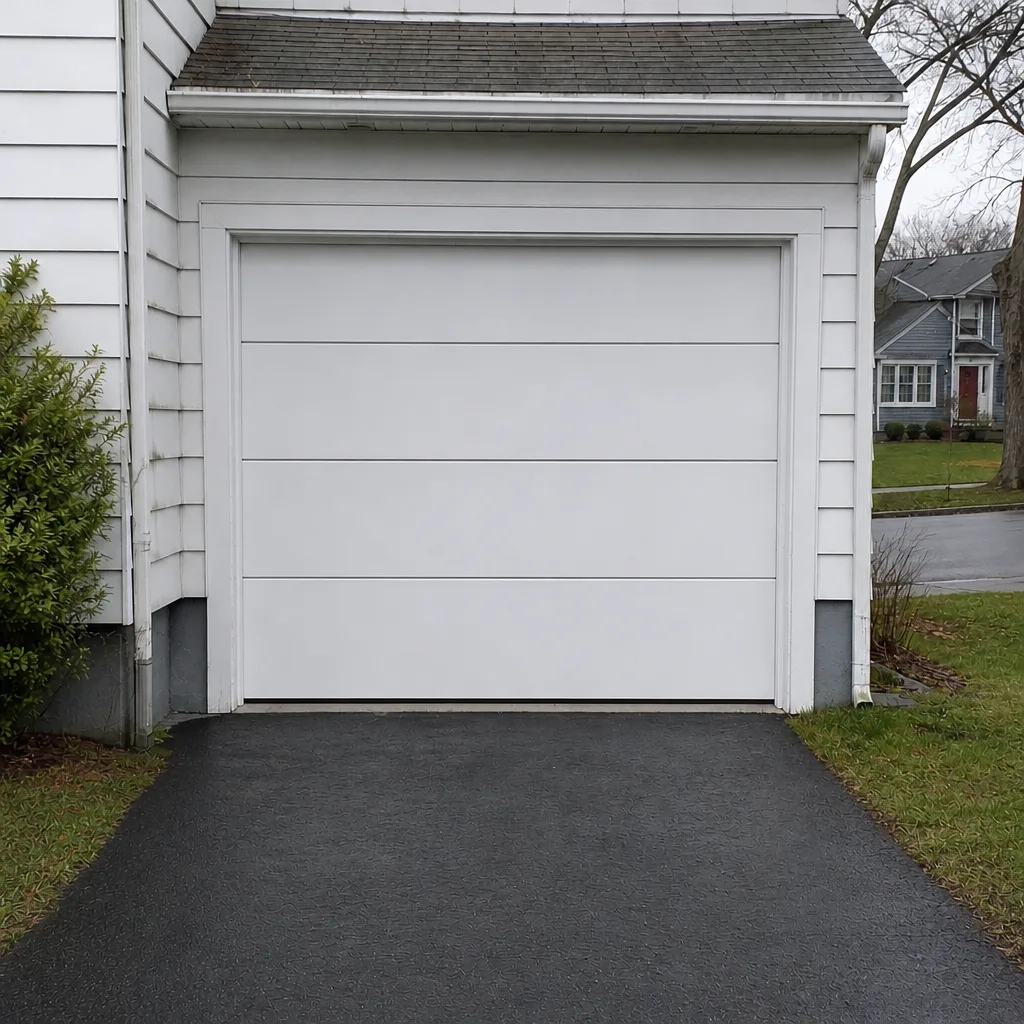 After
When to Call a Professional
Call a technician if any of the following is true: a spring has broken or is visibly stretched; a cable is frayed, kinked, or has jumped its drum; the door is dragging, binding, or hanging off-square; the header above the opening is rotted, cracked, or sagging; the opener is making a grinding noise or the door reverses unexpectedly; or the door won’t open and won’t close and you can’t wait for a scheduled visit. For a spring or cable that has failed and left the door stuck open or closed, don’t try to force it. Keep clear and call.
West Hartford Garage Door Repair Pros offers free estimates in West Hartford – call (855) 337-1712. Our technicians have up to 15 years of experience, we’re familiar with the systems in West Hartford garages, and we can arrange emergency dispatch when a door fails at the wrong moment. We also handle full installation if a repair no longer makes sense.
Frequently Asked Questions
You shouldn’t. Torsion springs store enough energy to cause serious injury, and the tools, spring spec, and balance testing needed for a correct install are beyond what a homeowner can reliably assemble for a one-time job. Spring work belongs to a trained technician; the local pro is licensed and insured as their state requires. Call (855) 337-1712 if a spring has failed – estimates are free.
Not reliably. Most homeowner’s policies exclude damage from faulty workmanship or work done without a permit, and unpermitted structural work can complicate a claim. If your own repair causes water damage or structural failure, the claim may be denied. A licensed technician’s work is covered by their insurance, which is a cleaner arrangement if something goes wrong.
A single spring typically estimates around $180 to $340 in the area, and a matched pair is usually about twice that since both are replaced together. The written estimate you approve before any work sets the final price. Call (855) 337-1712 for an exact quote – estimates are free.
Often yes. Emergency garage door service is a real, marketed part of what we do, and we can arrange dispatch when a door fails unexpectedly. Call (855) 337-1712 and tell us exactly what the door is doing and your West Hartford address. The more specific you are, the more useful the first call is. Estimates and pricing are confirmed before any work starts.
Not if the quote was based on an accurate description. We quote and agree on the price before any work starts, and if a technician uncovers something additional, we discuss it with you first. You never get an invoice that doesn’t match what you approved. Call (855) 337-1712 to book a free estimate.
Yes. The local pro we connect you with is licensed and insured as their state requires, and working on the systems in West Hartford homes is what they do. Our technicians have up to 15 years of experience, familiar with the major brands – LiftMaster, Chamberlain, Genie, Clopay, Amarr, Wayne Dalton, Craftsman, and Raynor – and they diagnose the specific system in front of them rather than a generic stand-in. Call (855) 337-1712 with your door’s details.
The Bottom Line
The DIY-versus-pro garage door question isn’t about how handy you are. It’s about which tasks have a risk profile a homeowner can absorb and which ones carry consequences that only a trained technician should be responsible for. Weatherstripping, sensor alignment, lubrication, and careful inspection are all yours. Spring work, cable replacement, and structural header repair are not – not because of gatekeeping, but because the physics of stored energy and the Connecticut liability picture make a technician’s visit the smart financial move in addition to the safe one. Prep your door, phase the work when it makes sense, and let a pro handle the high-stakes jobs. That’s the version of DIY-vs-pro that actually pays off.
If you want a straight answer on your specific door, we’re ready. West Hartford Garage Door Repair Pros offers free estimates in West Hartford. Call (855) 337-1712 today to talk through what your door needs and to schedule a visit. You can also start with our West Hartford Garage Door Repair Pros page for the full scope of what we cover, then call for a free estimate whenever you’re ready. We work on the brand already in your garage, and we’ll tell you honestly whether repair or replacement makes more sense.
Written by the team at West Hartford Garage Door Repair Pros.