Top Signs You Need Garage Door Service – Don’t Ignore These
Most garage doors that fail badly gave fair warning first. A torsion spring usually grinds, lifts unevenly and feels heavier than normal for two to four weeks before it snaps. That stretch is the gap between a scheduled replacement and a middle-of-the-night emergency call. In our experience around West Hartford, the homeowners who catch the warning get the cheaper, calmer outcome.
So what should you actually listen for, look at, and feel? The signs below are the ones we check first on every garage door repair visit. Run through them every couple of months. If one of them sounds familiar and you’d rather not crawl around the door yourself, call (855) 337-1712 and we’ll take a look.
Key Takeaways
- Three sounds mean three different things: squealing points to rollers and hinges, grinding points to a spring or opener gear, popping means a spring is about to fail.
- A five-minute visual check of cables, springs, and track alignment catches most problems before they get expensive.
- Uneven lifting, drift, and slow response are early mechanical failures, not “just how the door has always been.”
- March and November are the two months Connecticut temperature swings stress garage door hardware hardest. Book a check then.
- Catching a worn roller early costs far less than letting it chew up the track behind it.
What Sounds Should Make You Call for Service?
The sound your door makes tells you which component is failing, and the three main noises are not interchangeable. Squealing is usually metal-on-metal friction from dry or worn rollers and hinges. Grinding is heavier: it can mean a torsion spring losing tension or a stripped gear inside the opener. Popping is the one to take seriously. A pop or bang often means a spring is under load and about to break, and that’s a stop-using-it-now situation.
Here’s how we sort those sounds on a West Hartford service call:
- High-pitched squeal while the door moves: rollers and hinges need attention. Relube or replace the rollers; left alone, a seized roller drags the door and strains the opener.
- Grinding that starts partway up: often the spring or the opener’s drive gear. On a LiftMaster or Chamberlain chain or belt drive, a worn gear makes a distinct grinding whine.
- A single loud pop, then the door won’t lift: a spring has likely snapped. Stop operating it and call.
- Rattling over every panel: loose fasteners or a track that’s worked out of alignment.
If the door only groans in cold weather and settles down by afternoon, that’s usually tight hardware, but it’s still worth a look. Grinding and popping are more than a nuisance: spring failure is a safety issue, not just an inconvenience, because the door can come down hard and the springs themselves store serious energy. We won’t talk anyone through do-it-yourself torsion spring work for that reason. That’s a job for a trained technician with the right winding bars.
The Five-Minute Visual Check Every Homeowner Can Do
You can spot most failing hardware with your eyes, without touching a spring or a cable under tension. Do this check with the door closed, from the ground, and look at four things: cables, springs, track, and the door itself.
- Cables: a healthy cable sits tight and even on the drum. Fraying strands, a kink, or a cable that looks like it’s slipping off the drum is a red flag. Never touch a cable under tension. Call instead.
- Springs: a torsion spring over the door should look whole and evenly spaced. A visible gap in the coil means it’s broken. If the spring looks stretched or the door feels heavy to lift by hand, an experienced eye should check the tension. Don’t try to adjust it.
- Track: the vertical and horizontal rails should run parallel to the door. Dents, bends, or gaps at the joints cause the rollers to jump and bind.
- Door and panels: look for cracks, sagging, or panels that have pulled loose, especially on heavier steel doors like a Clopay or Amarr model. Small cracks grow.
Worn cables and overstressed springs are the two things we find most on West Hartford callouts, and both are cheap to catch early and expensive to catch late. If anything in the five-minute check looks off, stop lifting the door and get a technician to confirm before you run the opener again.
When Should Uneven Movement or Drift Worry You?
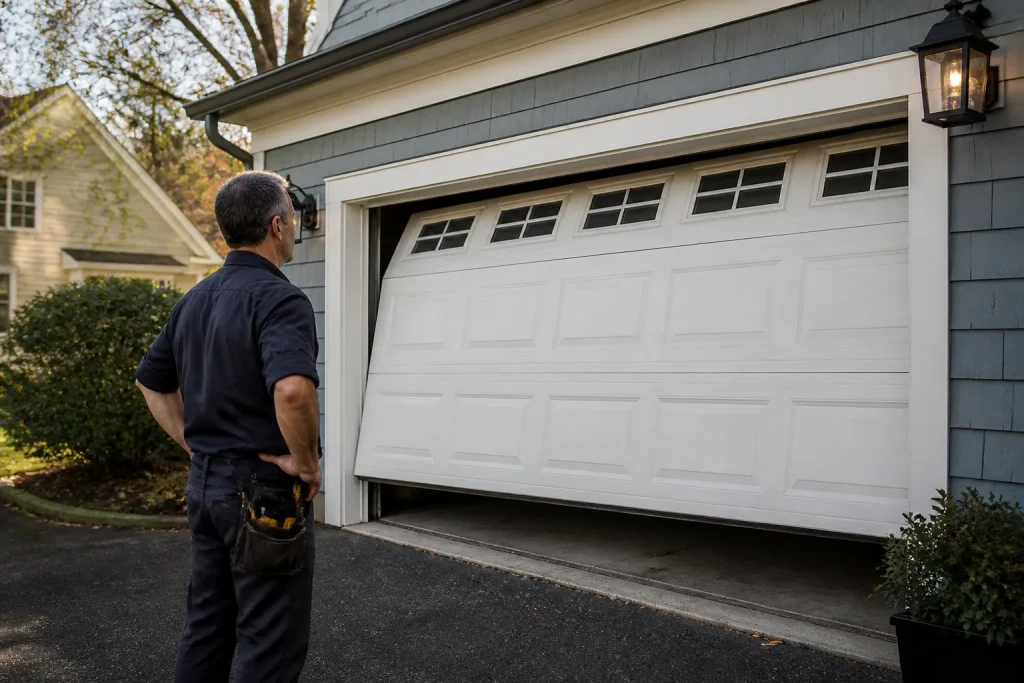
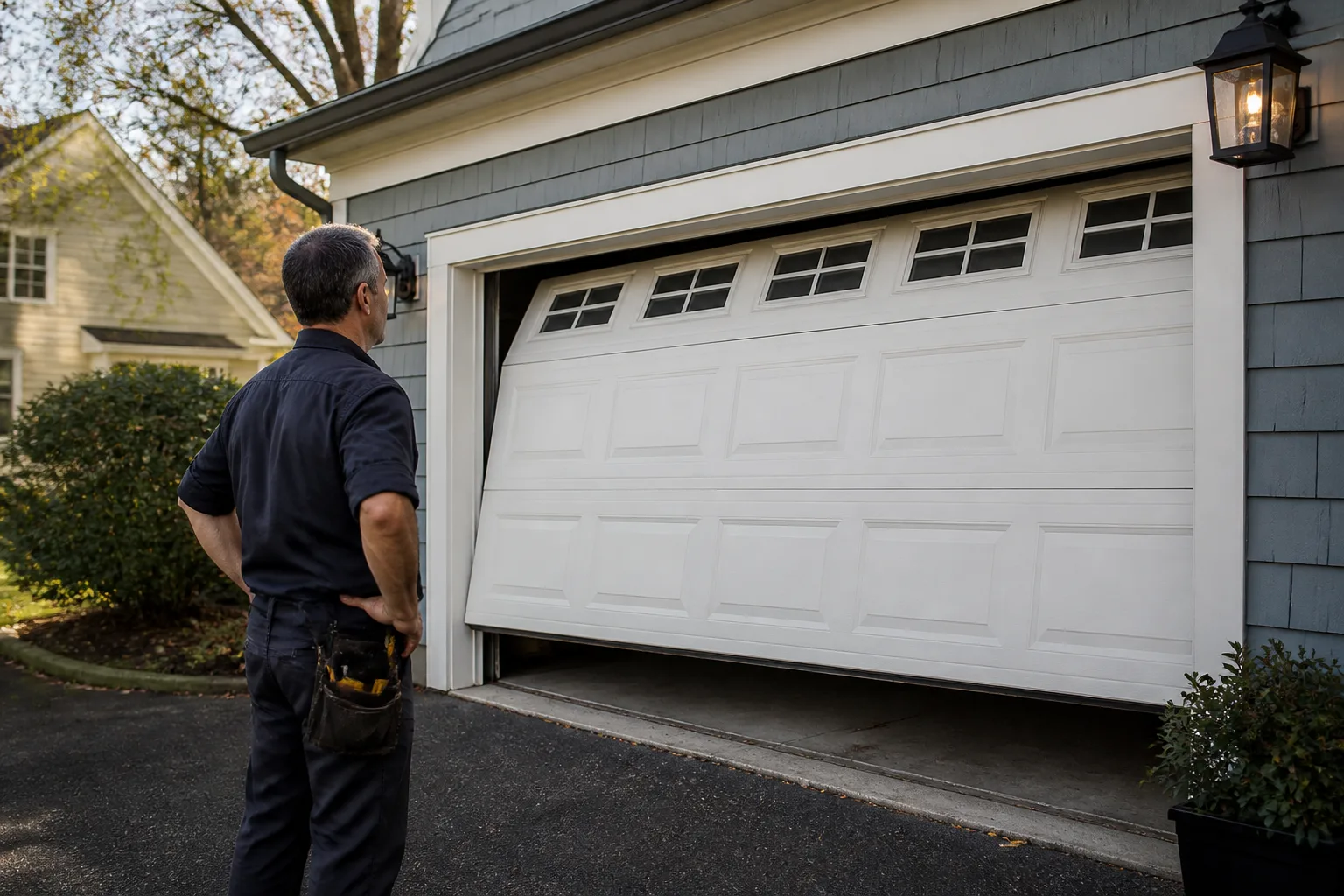
A door that lifts crooked, drifts back down a few inches, or responds slowly to the remote is already showing early mechanical failure. These are the symptoms homeowners most often write off as quirks. They’re not. Uneven movement usually means a stretched spring on one side, a worn roller, or a track out of alignment, and all three get worse with use.
Watch for these:
- The door lifts at an angle, one side lagging behind the other.
- It drifts back down a few inches after opening.
- The opener hesitates, clicks, or reverses for no clear reason before moving.
- The safety sensors need nudging or the door reverses on its own.
On older doors running a Craftsman or Genie opener, a slow or inconsistent response is often a tired motor capacitor or a worn drive gear rather than the door itself. On a modern LiftMaster or Chamberlain unit, it’s frequently a sensor or logic board issue. Different brands fail in different ways, which is why we ask what system is in the garage before we arrive. If it turns out to be the opener rather than the door, that’s a quick pivot to garage door opener repair.
Why March and November Are the Months to Book a Check in West Hartford
Connecticut temperature swings are hard on garage door hardware, and the two stress points land in March and November. In March, the freeze-thaw cycle loosens fasteners, warps tracks and works grease out of rollers. In November, the first hard cold makes springs and metal stiff and brittle, just as the door starts running more every day. Those are the months when a seasonal inspection actually pays for itself.
A West Hartford garage door takes more punishment than people realize. The temperature climbs above freezing, then drops back overnight, over and over. That expansion and contraction finds every loose bolt and every dry hinge. Springs, cables and rollers all carry the load, and small faults surface fastest when the metal is moving between warm and cold.
A seasonal check is simple: a technician confirms spring tension, checks cables and drums, lubricates moving parts, and tests the opener’s force and safety settings. The idea is to catch a $65 roller before it wears into the track, or a tired spring before it snaps on a cold morning. Book it in spring and fall and the door tends to behave the rest of the year. Spring repair is one of the highest-stakes jobs on a door, and a check now is the best way to avoid an emergency call later. If a spring does break, that’s where garage door spring repair comes in, and we’d rather you call us before the door is stuck.
The Cheaper Fix You Miss by Waiting
Garage door problems compound. A worn roller is a low-cost item to replace. Left alone, that same roller starts dragging, jumps the track and dents the rail behind it, and now you’re replacing track as well as rollers. Same principle with a slightly out-of-balance door: a small adjustment now, or a worn spring and strained opener later.
Think of it as a chain. One bad part loads the next one:
- Dry or seized roller stresses the track, and a damaged track means a bigger replacement.
- Failing spring forces the opener to work beyond its design and shortens the motor’s life.
- Bent track throws every roller out of line and can crack a panel on a heavy door.
- Ignored opener fault can leave you locked in or out when it finally quits.
This is the core of why the warning window matters. Catching a problem early usually costs a fraction of the emergency repair. When a door fails at the worst time, we run emergency garage door service, but we’d genuinely rather you call us during the maintenance window than after the pop. Regular service on the brand already in your garage is the whole trick.
When to Call a Pro
Some things are fine to check yourself, and a few are not. Call a technician when you hear popping or banging, when the door lifts crooked or drifts, when you see a broken spring or a frayed cable, or when the opener reverses on its own. Those point to springs, cables and opener logic, which carry real risk if handled wrong. A trained technician with proper tools is the safe route, and our technicians have up to 15 years of experience with the specific systems we see most in West Hartford.
Related services in West Hartford
If a sign you spotted points to the door mechanism itself, start with garage door repair. If the door responds oddly to the remote or stalls at the top, it’s likely time for garage door opener repair. And if the springs are the culprit, garage door spring repair is the right call. You can see the full range of work we do at West Hartford Garage Door Repair Pros. We work on the brand already in your garage, whether that’s a Wayne Dalton steel door, a LiftMaster opener, or a Raynor setup in an older home, and where a door is beyond saving we’ll tell you straight and handle the garage door repair versus replacement conversation without an upsell.
The Bottom Line
Garage doors fail on a predictable timeline, and almost every big breakdown starts with a warning most homeowners brush off. Squealing, grinding and popping mean three different things. Uneven lift and drift are early failures, not quirks. March and November are the seasons to check hardware in West Hartford before the temperature swings do their work. Catch a worn roller early and you skip the track replacement. Catch a tired spring and you skip the emergency call. The five-minute visual check and a seasonal service visit are the two habits that keep a door out of trouble.
If you’re in West Hartford and need help, West Hartford Garage Door Repair Pros offers free estimates. Call (855) 337-1712 for an honest read on what your door needs, repair or replace.
Frequently Asked Questions
Grinding or popping sounds during operation are the most common early signs, followed by uneven lifting. Squealing usually points to dry rollers and hinges, which is a simpler fix, while grinding and popping suggest a spring or opener problem that should be checked right away. Call (855) 337-1712 if you’re hearing any of them.
No. Torsion springs store a large amount of energy under tension, and adjusting or replacing one without the right tools and training can cause serious injury. This is a job for a trained technician. Spring failure is a safety issue, not just an inconvenience, and it’s why we handle spring repair as a core part of our service.
Twice a year suits most homes here, timed to March and November when Connecticut temperature swings stress hardware most. A seasonal check confirms spring tension, inspects cables and rollers, and tests the opener’s safety settings so small faults get caught before they turn into repairs.
Not usually. A slow, jerky response is often a worn roller, an out-of-balance door, or a failing component inside the opener such as a drive gear or sensor. We diagnose the specific brand in your garage, whether that’s a LiftMaster, Chamberlain, Craftsman or Genie system, and the right part for your model. Call (855) 337-1712 and we’ll tell you what it needs.
Written by the team at West Hartford Garage Door Repair Pros.
Need Garage Door Help?
Call West Hartford Garage Door Repair Pros - the local pro we connect you with is licensed and insured, here with fast after-hours help in West Hartford.
(855) 337-1712